
🔍 Introduction :
After decades working alongside executive teams and founders in tech companies, I’ve learned this:
The greatest threat to strategic decision-making doesn’t always come from flawed data, lack of insight, or poor processes.
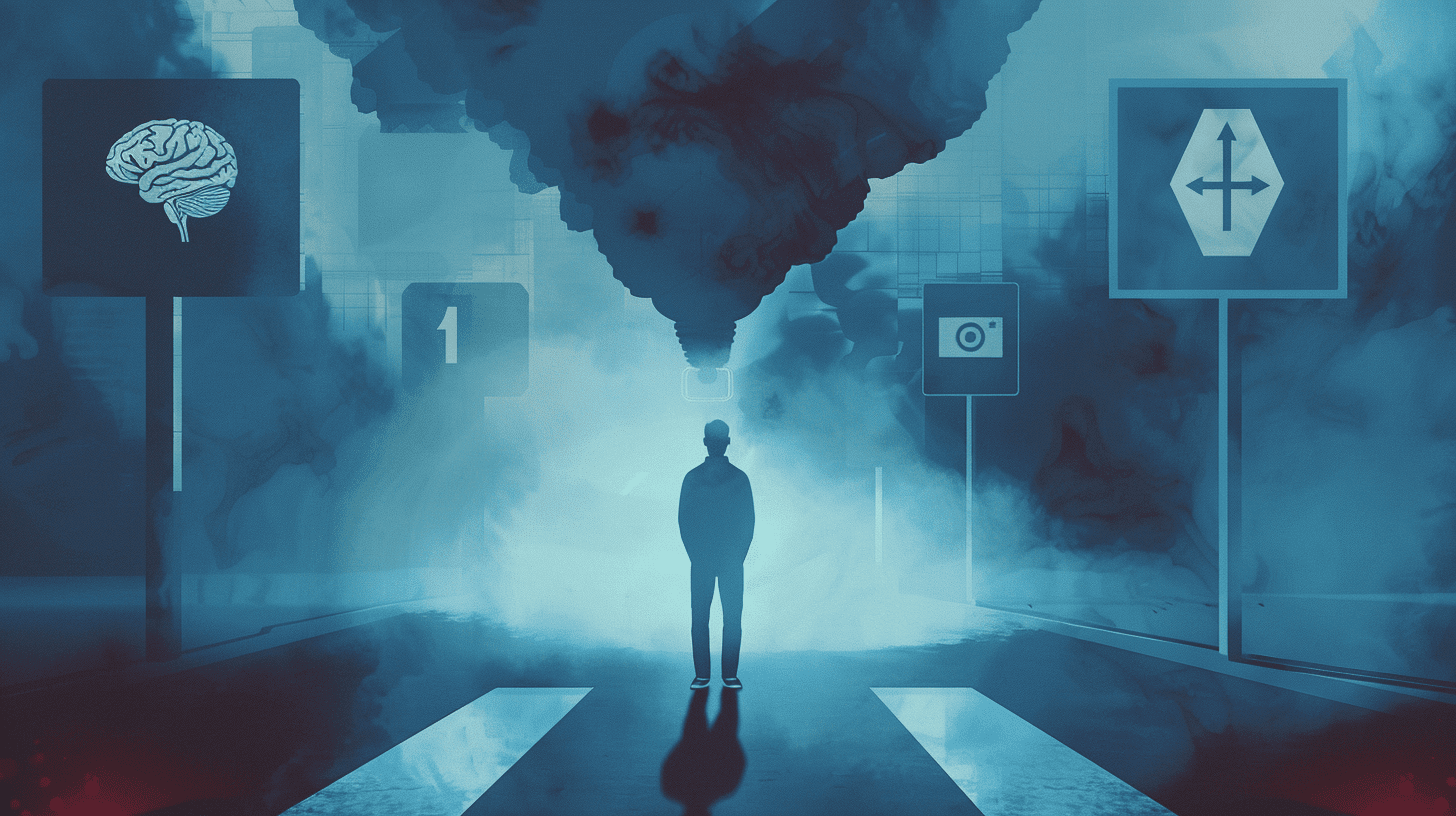
More often, it comes from within — from the way our own minds operate.
Cognitive biases affect how we process information, evaluate options, and make choices. They’re ever-present, largely invisible, and incredibly powerful. And they don’t just influence our judgement — they shape the way others present facts to us.
As Operating Partner, I’ve seen these biases disrupt alignment, stall initiatives, and even distort investor relations.
We cannot eliminate them. But we can train ourselves — and our leaders — to spot them, mitigate their effects, and maintain our autonomy in decision-making.
—
🧠 What is a cognitive bias?
In short: a systematic error in the way we perceive, remember, or interpret information. And there are dozens of them.
Here are some of the most common in business environments:
- Confirmation bias: We favour information that supports our existing beliefs.
- Authority bias: We overvalue the opinion of those in positions of perceived influence.
- Recency bias: We give more weight to the latest events, ignoring longer-term patterns.
- Halo effect: We judge entire strategies or people based on a single positive or negative trait.
These distortions don’t just affect individuals — they infiltrate executive committees, product boards, and GTM strategies. Left unchecked, they can derail critical decisions.
—
⚠ When bias meets manipulation
There’s a darker layer too.
Some colleagues — whether consciously or unconsciously — learn to exploit these biases.
They know which data to emphasise.
They sense which narrative will get the “yes” they want.
They time their input strategically.
It’s not always malicious — often, it’s cultural. But it does skew judgement.
And in a world shaped by social media’s attention economy, where influence and emotion override depth and nuance, these tendencies are amplified every day.
—
🤖 Add Generative AI to the Mix
The emergence of generative AI adds a new layer of complexity.
These tools — powerful as they are — can reinforce rather than challenge our biases.
Examples I’ve seen:
- Asking AI for “confirmation” rather than insight.
- Taking well-written but unverified responses at face value.
- Mistaking fluency for truth.
This creates a risk: decisions that feel objective, but are actually anchored in the biases we fed into the system.
AI doesn’t free us from our blind spots. It mirrors them — and makes them harder to detect.
—
🛡 Training for Cognitive Vigilance
The good news? Awareness is a skill — and it can be developed.
In the companies I support, we make bias detection a core component of strategic leadership. That includes:
- Training executives to recognise common cognitive distortions
- Embedding checks in decision workflows (e.g. pre-mortems, structured dissent, reverse assumptions)
- Encouraging diversity of perspective — and rewarding thoughtful disagreement
- Building a culture of “meta-thinking”: not just what do we think, but how do we think?
It’s not about erasing bias. That’s impossible.
It’s about building a discipline of critical thought that stands up to pressure — and influence.
—
🎯 Conclusion: Decision-making as a Discipline
Biases are a feature of the human mind — not a flaw. But in high-stakes environments, they can have disproportionate impact.
In a world increasingly shaped by algorithms, persuasive narratives, and AI-generated insight, our responsibility is to safeguard independent thinking.
As leaders, our best protection is not certainty — but structured doubt.
Not infallibility — but vigilance.
Not reactive decisions — but thoughtful, transparent processes.
Because long-term performance doesn’t come from better instincts.
It comes from better decisions.